Introduction – Quick snapshot for merchants
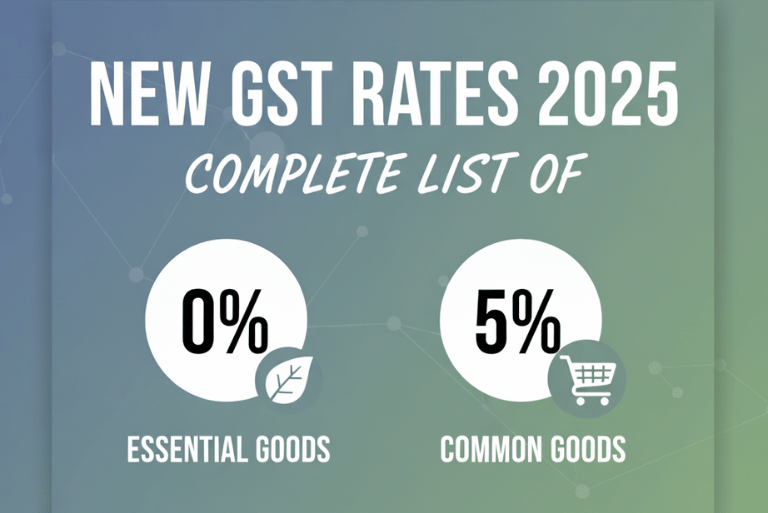
If you sell household staples, packaged foods, or school supplies, the GST overhaul that takes effect on 22 September 2025 matters for your margins and pricing. The GST Council’s reforms have moved many everyday items into GST rates 2025, 0% and 5% goods brackets to reduce costs for consumers and simplify taxation for sellers. This short guide lists the common items affected, explains what that means at the till, and gives clear actions merchants should take now.
What’s zero-rated (0%) — the essentials now tax-free
The Council has zero-rated a range of items used in daily cooking, household use and education. Notable examples include certain dairy products (like UHT milk), pre-packaged and labelled chena/paneer, and staple Indian breads such as chapati/roti/paratha. Several education supplies — exercise books, pencils, erasers and crayons — are also exempted, as are selected life-saving medicines and individual life insurance products. These moves are intended to lower routine household expenses and the cost of learning materials.
What sits at 5% — merit and basic consumption goods
A broader set of everyday items has been shifted to 5% GST. This category typically covers merit goods and essential consumer articles that previously attracted mid-level rates. Expect items such as packaged staples (certain packaged foods), basic personal-care products (select soaps, shampoos, toothpastes), many dairy products (but not all), low-cost household articles and some agri/irrigation inputs to fall under 5%. The intention: keep essentials affordable while still maintaining a modest tax base for administration.
What’s not included — sin and luxury exceptions
Not all items saw relief. Tobacco products, pan masala, gutkha and certain cigarettes remain under existing higher rates and compensation cess until further notice; they were explicitly excluded from the general roll-out. Luxury and demerit goods (e.g., certain high-end beverages and premium automobiles) are either held at high rates or moved to a special 40% slab. Merchants should not expect price relief in these categories.
Why this matters at your shop (short, practical points)
Lower or nil GST on everyday items can mean smaller retail prices or better margins — but the benefit only arrives if you update pricing, invoices and stock tags promptly. For packaged goods, the government has allowed MRP revision on unsold stock within a notified window so retailers can align shelf prices without losing out. Expect customers to ask if prices have fallen; be ready with clear invoices showing the new GST breakdown.
Quick checklist for merchants (do these this week)
- Update POS & billing rates: Load 0% and 5% codes into your billing software and test a few sample invoices.
- Re-tag unsold stock: If you hold pre-packed items, follow the notified MRP revision rules (sticker/stamping) and keep records.
- Train staff: Make sure cashiers can explain price changes and show the GST line on bills.
- Review supplier invoices: Check whether supplier prices or HSN codes have changed so your ITC and costing remain correct.
- Monitor fast-moving SKUs: Track sales velocity for items that became cheaper — stock may move faster than before
FAQ — merchants’ top questions answered
Q1. When do these new rates apply?
Ans. Most changes come into effect on 22 September 2025 (check official notifications for any narrow exceptions).
Q2. Will I have to repaint price tags on all items?
Ans. For pre-packed goods, revised MRPs via stickers/stamps are allowed in the notified window; fresh price tags on loose items are a merchant decision. Keep documentation.
Q3. Do I lose input tax credit (ITC) when an item moves to 0%?
Ans. A move to 0% affects output tax; ITC treatment depends on how your purchases were taxed and the transitional rules. Consult your tax advisor for complex cases.
Further reading — act on the 22 Sep 2025 GST changes
- Top GST Rate Changes That Businesses Must Watch in 2025
- GST Overhaul 2025: Key Announcements by Nirmala Sitharaman
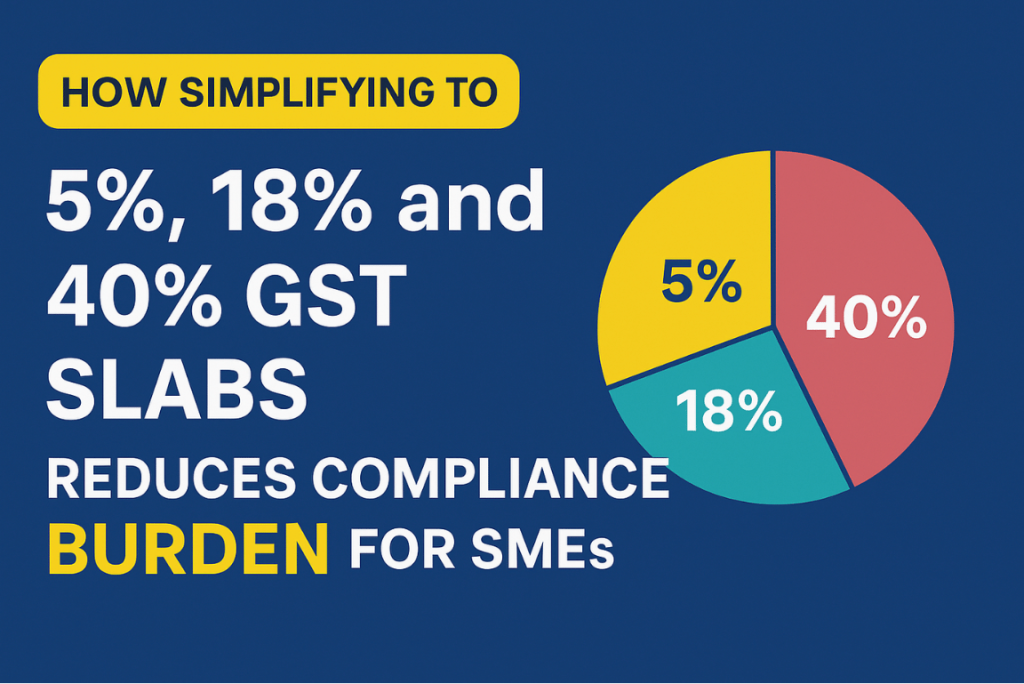
- GST 2.0 Explained: Simplified Slabs & SME Compliance Relief
Smarter setup for lean merchants
As margins and working capital shift, many small merchants reassess overheads and business presence. Virtual offices offer low-cost business addresses, local phone handling and professional mail management — handy if you’re expanding online sales, registering across states, or need a compliance-friendly business footprint without extra rent. If you’re planning to scale or formalise operations post-GST change, a virtual office can keep costs low while you reinvest savings into inventory and customer experience. Explore our virtual office plans here.
Conclusion — what to do now
The move of many everyday goods to 0% or 5% GST is a merchant-level game-changer. Update your POS systems, retag or document unsold stock, train staff to explain changes, and watch demand patterns closely. The reforms take effect on 22 September 2025 — act now so you capture consumer demand and protect your margins when shoppers start buying for the festival season.
References
- GST Council — Press Release & recommendations (PIB / GST Council PDF). Goods and Services Tax Council
- Items moved to 0% list (India Today / Hindustan Times coverage). India Today, Hindustan Times
- Full list and sector impact (Economic Times / Financial Express). Financial Express
- Govt allows MRP revision on unsold stock (Economic Times coverage). The Economic Times
- Analysis & summary of GST 2.0 slabs (Kotak / Ambit / ClearTax summaries). Kotak Mutual Fund
- Other References: Press Information Bureau, Hindustan Times, Ambit Finvest, CA Guruji Classes, Jagran Josh, ClearTax