Introduction –
The Goods and Services Tax (GST) in India significantly affects vehicle prices. In 2025, the government introduced GST reforms to simplify tax rates and make car ownership more affordable. This guide explains how these changes impact car buyers, dealerships, and finance planners.
Overview of 2025 GST Reforms
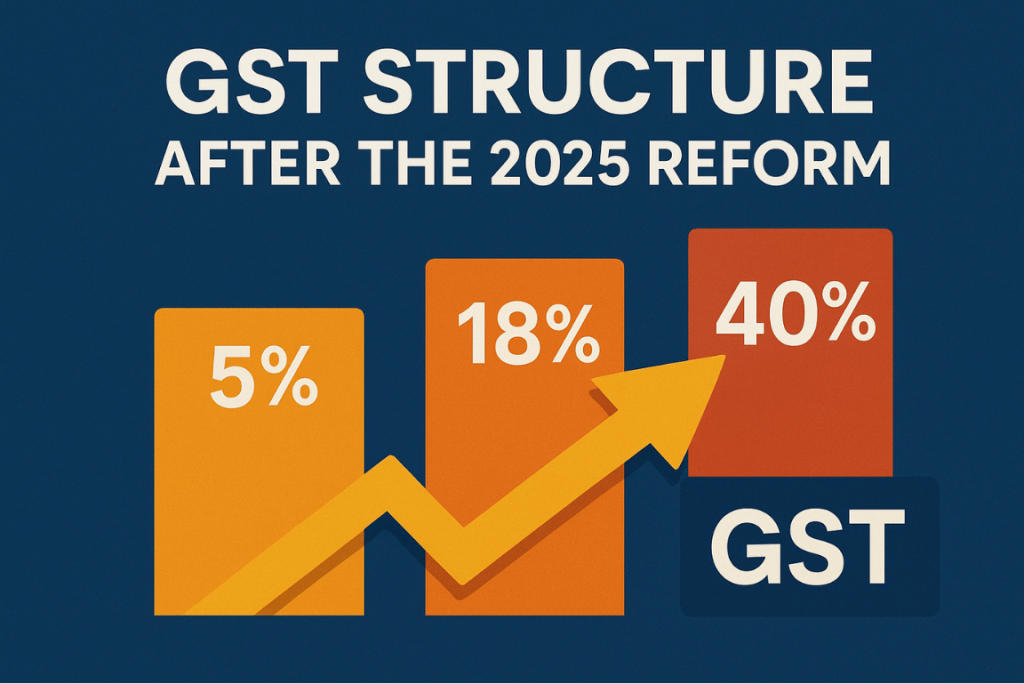
Effective September 22, 2025, the GST Council introduced a simplified tax structure for automobiles aimed at reducing compliance burdens and streamlining pricing. Under the new framework, standard and small cars are taxed at 18% GST, making them more affordable for both businesses and consumers. On the other hand, luxury and sin goods, including high-end cars and SUVs, now fall under the 40% GST slab. This reform replaces the earlier multiple tax slabs with a clearer, two-tier system, offering businesses greater predictability in pricing, inventory planning, and compliance management. (Times of India)
Impact on Different Types of Cars
Small Cars / Hatchbacks
Small cars now fall under 18% GST, reduced from the previous combined 28% (GST + compensation cess). This reduction makes these vehicles more affordable for budget-conscious buyers.
Example: A hatchback priced at ₹6 lakh ex-showroom may see a tax reduction of ₹72,000, lowering the on-road price significantly. (Economic Times)
Luxury Cars / SUVs
Luxury cars and SUVs now fall under the 40% GST slab. While the GST rate is higher, the removal of the compensation cess may reduce the overall tax burden slightly.
Example: A premium SUV that previously had a 50% total tax may now see the effective tax closer to 40–45%. (Times of India)
Electric Vehicles (EVs)
EVs continue to enjoy 5% GST, supporting the government’s green mobility initiative.
Example: EV buyers will not face additional tax burdens, keeping EVs competitive. (EV Reporter)
Pricing Implications for Buyers
The 2025 GST rate changes have a direct impact on automobile pricing across segments. For small cars, the shift to an 18% GST slab has lowered on-road prices by an estimated 10–12%, making them more attractive for budget-conscious buyers. In the case of luxury cars and SUVs, the replacement of multiple slabs and cess with a flat 40% GST has led to a slight reduction in overall costs, though these vehicles remain in the premium bracket. Meanwhile, electric vehicles (EVs) continue to enjoy a 5% GST rate, giving them a strong competitive edge in terms of affordability and long-term savings. Buyers are advised to always check GST-inclusive pricing with dealers to ensure clarity before finalizing a purchase (Economic Times)
Financing and Loan Implications
The revised GST rates on cars in 2025 also influence financing and ownership costs. With lower ex-showroom prices, buyers benefit from reduced loan amounts and lower monthly EMIs, improving overall affordability. Additionally, vehicle insurance premiums are expected to decrease, as they are directly linked to the insured declared value (IDV), which falls when car prices reduce. Furthermore, registration charges and road tax, both calculated as a percentage of the vehicle’s price, may also decline—resulting in significant savings over the vehicle’s lifecycle. These changes make vehicle financing more accessible and cost-effective for both individual and corporate buyers.
Dealer and Market Response
The 2025 GST reforms are expected to shape how automobile dealers and the broader market respond to changing tax dynamics. Dealers are likely to restructure inventory, focusing more on small cars and electric vehicles (EVs), which benefit from lower GST rates and stronger buyer interest. To capitalize on demand, many dealerships may introduce promotional offers, discounts, and flexible financing options. As a result, market demand for small cars and EVs is projected to rise steadily, while the luxury car segment—despite falling under the higher 40% slab—should maintain stable demand due to its niche customer base. For businesses in the automotive sector, these shifts represent opportunities to align sales strategies with evolving consumer preferences under the new GST framework. (Moneycontrol)
FAQs / Quick Facts
Q1. When do new GST rates apply?
Ans. September 22, 2025.
Q2. Which cars benefit most?
Ans. Small cars and hatchbacks benefit most from reduced GST.
Q3. Are there hidden costs?
Ans. The compensation cess has been removed, so the net tax burden is lower.
Beyond Cars – What GST Means for Everyday Choices
GST on vehicles is just one example of how policy changes shape consumer decisions. From healthcare to household goods, the ripple effects are everywhere, and businesses that anticipate these shifts are the ones that stay ahead.
To see how GST is reshaping industries beyond automobiles, check out:
- GST and Health Insurance: What You Need to Know – exploring its effect on medical coverage.
- Top GST Rate Changes That Businesses Must Watch in 2025 – for a bird’s-eye view of sectors most impacted.
- GST Slabs 2025 Guide – for clarity on the essentials, standards, and luxury goods.
Together, these insights give you a 360° view of GST reforms—helping both businesses and consumers prepare smartly.
Conclusion
The 2025 GST reforms make small cars and EVs more affordable, while luxury cars see minor reductions due to cess removal. Buyers should always check GST-inclusive pricing before purchase to maximise savings.