Table of Contents
Introduction: Understanding GST 2025 Changes
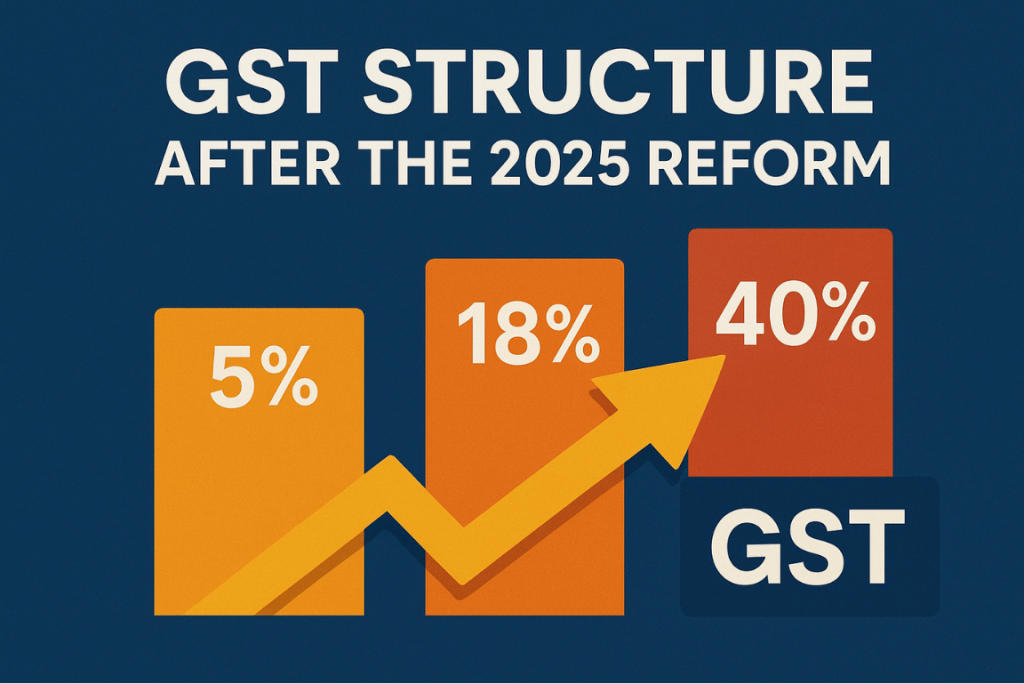
India’s Goods and Services Tax (GST) system is undergoing a significant transformation, effective September 22, 2025. The government has streamlined the tax structure by consolidating multiple slabs into two primary rates: 5% and 18%, with a special 40% slab introduced for luxury and sin goods. This reform aims to simplify compliance, reduce consumer costs on essentials, and enhance revenue from non-essential items.
GST Structure After the 2025 Reform
Under the revised GST 2.0 regime, India has moved to a simpler three-tier tax system. Essential and widely used products such as food items and household goods now fall under the 5% GST slab, making daily consumption more affordable. A broad range of goods and services are taxed at the 18% slab, which serves as the standard rate for most transactions. High-end and non-essential categories like premium vehicles, tobacco, and aerated drinks are placed in the 40% slab, designed to target luxury and sin goods. By removing the older 12% and 28% brackets, the government aims to streamline compliance, cut down on administrative hassle, and create a clearer structure for both businesses and consumers.
Detailed GST Slabs with Examples
5% GST Slab – The Essentials
The new 5% GST slab has been designed to make essential goods and services more affordable for the average consumer. It now covers daily-use household products such as toothpaste, hair oil, ice creams, and packaged foods, easing the burden on families. The benefit extends to the automobile sector as well, with small cars and motorcycles up to 350 cc shifting to this lower slab. Even public transport vehicles including buses, trucks, and ambulances are taxed at just 5%, helping reduce costs for logistics and healthcare. For example, a 350 cc motorcycle that earlier attracted a 28% GST is now placed under the 5% category, leading to a significant price drop and encouraging demand.
18% GST Slab – Standard Goods and Services
The 18% GST slab now applies to a broad category of standard goods that are widely used but do not qualify as essentials or luxury items. This includes popular electronics such as televisions and air conditioners, which remain important purchases for middle-class households. In the automobile sector, small cars and motorcycles above 350 cc are taxed at 18%, making them more affordable than luxury vehicles but higher than entry-level options. Additionally, auto parts, spares, and accessories also fall under this slab, ensuring consistency in pricing for repairs and upgrades. By keeping these products in the 18% category, the government strikes a balance between affordability and revenue collection.
40% GST Slab – Luxury and Sin Goods
The newly introduced 40% GST slab is reserved for products considered either luxury or harmful to public health. Key items in this category include tobacco, pan masala, and other related products, along with aerated drinks that are often linked to lifestyle-related health concerns. In addition, high-end luxury vehicles such as premium cars and SUVs are now placed under this slab, positioning them firmly as non-essential goods. The objective behind this higher tax rate is twofold: to generate greater revenue from premium consumption and to discourage excessive use of harmful or indulgent products. This makes the 40% GST slab a critical part of the government’s strategy to balance revenue needs with social responsibility.
Sector-Specific Highlights of the New GST Regime
Healthcare Sector
One of the biggest beneficiaries of the revised GST framework is the healthcare industry. The government has granted full exemption on 33 life-saving drugs, bringing them under the 0% GST slab. In addition, life and health insurance premiums are now tax-free, further reducing healthcare costs. These measures are designed to make medical treatment and essential coverage more accessible and affordable for citizens across income levels.
Automotive Sector
The automobile sector has undergone major GST adjustments aimed at boosting demand and supporting essential transport. Small cars and motorcycles up to 350 cc are now taxed at 18% instead of the previous 28%, while buses, trucks, and ambulances also see a reduction to 18% GST. These changes not only make personal mobility more affordable but also support commercial and public transport infrastructure.
Consumer Goods Sector
Everyday consumer products have also been restructured under the new GST slabs. Essential food items such as roti, paneer, and butter now fall under the 0% GST category, while popular snacks like noodles and chocolates have been placed in the 5% slab. The aim is to reduce the financial burden on households while keeping widely consumed packaged foods reasonably priced.
Implications of the New GST Rates for Businesses
The revised GST structure brings significant implications for Indian businesses, making it essential to adapt quickly. One of the most immediate requirements is pricing adjustments, as companies need to update product prices to reflect the new 5%, 18%, and 40% slabs. Equally important is ensuring smooth invoicing and compliance, which means upgrading billing systems and ERP software to incorporate the revised tax rates. Businesses must also review their inventory management practices, aligning stock records with the updated GST classifications to avoid compliance gaps. By making these adjustments proactively, companies can minimize disruptions, maintain accurate tax reporting, and stay competitive in a market shaped by GST 2.0 reforms.
FAQs
Q1. When do the new GST rates come into effect?
Ans. The revised GST structure applies from September 22, 2025.
Q2. Which items are exempt from GST?
Ans. Life-saving drugs and health insurance premiums now enjoy 0% GST.
Q3. Which items have seen a GST increase?
Ans. Luxury and sin goods under the 40% slab, including premium cars and tobacco products.
Preparing Your Business for GST 2.0
While understanding the new GST framework is crucial, what truly matters is how you adapt it to your business model. From reworking pricing strategies to streamlining invoicing and compliance, every step impacts profitability.
If you’d like deeper insights into specific areas, you can explore our other detailed guides:
- GST Rate Changes 2025: What Businesses Must Watch – for a breakdown of sector-specific shifts.
- How GST Reforms Will Impact Car Buyers in India – if you’re in the automotive space.
- GST and Health Insurance: What You Need to Know – for financial and healthcare-related implications.
By connecting these dots, businesses can not only stay compliant but also uncover opportunities to stay competitive in 2025 and beyond.
Conclusion: Stay Updated with GST 2025
The 2025 GST overhaul simplifies India’s tax system, reduces compliance burdens, and ensures essential goods remain affordable. By consolidating slabs and introducing a special rate for luxury items, the government balances revenue generation with consumer welfare. Businesses must promptly update pricing, invoicing systems, and inventory management practices to comply with the new GST structure. Staying compliant will help businesses maintain smooth operations while supporting the broader goal of an equitable tax regime.
Leave a Reply