Introduction — a quick frame

India’s Automobile GST 2025 update (rolled out on 22 September 2025) changed how vehicles are taxed. The net result: small, mass-market cars and many commuter motorcycles benefit from a lower 18% rate, while luxury and high-end vehicles fall into a new 40% slab. That split reshapes affordability, dealer strategy and finance decisions across the auto market.
What changed — slabs in plain terms
Under the new regime the GST Council simplified slabs so that most everyday vehicles — small petrol/LPG/CNG cars (sub-4 metre, lower engine capacities) and commuter two-wheelers — are taxed at 18%. Larger, premium cars and certain high-emission or luxury models are assigned the 40% top slab. The reform replaces the earlier 28% + variable cess mix for many models and removes a lot of classification ambiguity.
Small cars & motorcycles — real price relief, real buyers’ benefit
Because the headline GST on many small cars and commuter bikes fell to 18%, multiple manufacturers announced immediate price reductions and festive offers. Industry coverage shows several mass-market models now retail at meaningful discounts (in some cases bringing small cars under ₹4 lakh on-road), and OEMs have publicly passed on cuts to boost demand. That translates into lower EMIs, easier first-time purchases, and a clear increase in showroom traffic. If you’ve been waiting to buy a budget hatchback or commuter bike, this change materially improves affordability.
Luxury vehicles — higher slab, higher sticker price
High-end sedans, SUVs and performance motorcycles face a steeper tax at 40%. For buyers in that bracket the GST change is effectively an increase in tax incidence compared with the previous regime (which blended 28% GST with variable cesses). Dealers of premium brands must decide whether to absorb some pain to keep volumes, or pass the cost onto buyers — either way, expect a wider price gap between mass-market and premium segments.
How dealers and manufacturers should respond (practical checklist)
Update systems, train teams, and document everything. Key actions:
• Push the new tax tables into POS, ERP and e-invoicing so invoices correctly reflect 18% or 40%.
• Reprice unsold stock only under permitted MRP-revision rules and retain photographic + invoice evidence. The government has allowed MRP revisions on unsold pre-22-Sep stock to smooth transition.
• Coordinate with financiers — revised prices change EMI calculations and loan-to-value decisions.
• Pilot pass-through strategies: test partial vs full pass-through on a small set of SKUs or outlets to observe volume effects before company-wide rollouts.
Who wins, who risks losing — a short read
Winners: first-time buyers, rural & semi-urban customers, mass-market OEMs and aftermarket service businesses (installation, accessories, spares) that benefit from higher volumes. Risks: premium dealerships and niche importers who may see fewer impulse buys and must manage inventory turnover carefully. Across the chain, lenders, insurers and aftermarket players should update models to reflect changed volumes and ticket sizes.
Pricing & financing — what buyers must check
If you booked a vehicle before 22 September but take delivery after the change, confirm your final invoice: most manufacturers committed to passing on benefits where appropriate. Check whether the dealer has revised MRP on unsold units according to the official permission and ask for a clear invoice showing the GST line and EMI recalculation. Remember: GST is charged on the transaction value after documented discounts, so ensure discounts appear on the bill if they were promised.
FAQs — quick answers for shoppers & dealers
Q1. When did these new taxes kick in?
Ans. The GST 2.0 slabs took effect on 22 September 2025.
Q2. Are small cars now always cheaper?
Ans. Many are cheaper because of the 18% slab and manufacturer pass-throughs, but model-level pricing varies — always confirm current ex-showroom and on-road rates.
Q3. Can a dealer change MRP on existing units?
Ans. Yes — the government allowed MRP revisions for unsold pre-22-Sep packaged/labelled stock under specified rules; document all changes.
Further reading — act on the 22 Sep 2025 GST changes
- Wedding GST Update: Tax Impact on Clothes, Food & Décor
- GST 2.0 Update: Lower Tax on Solar and Green Energy
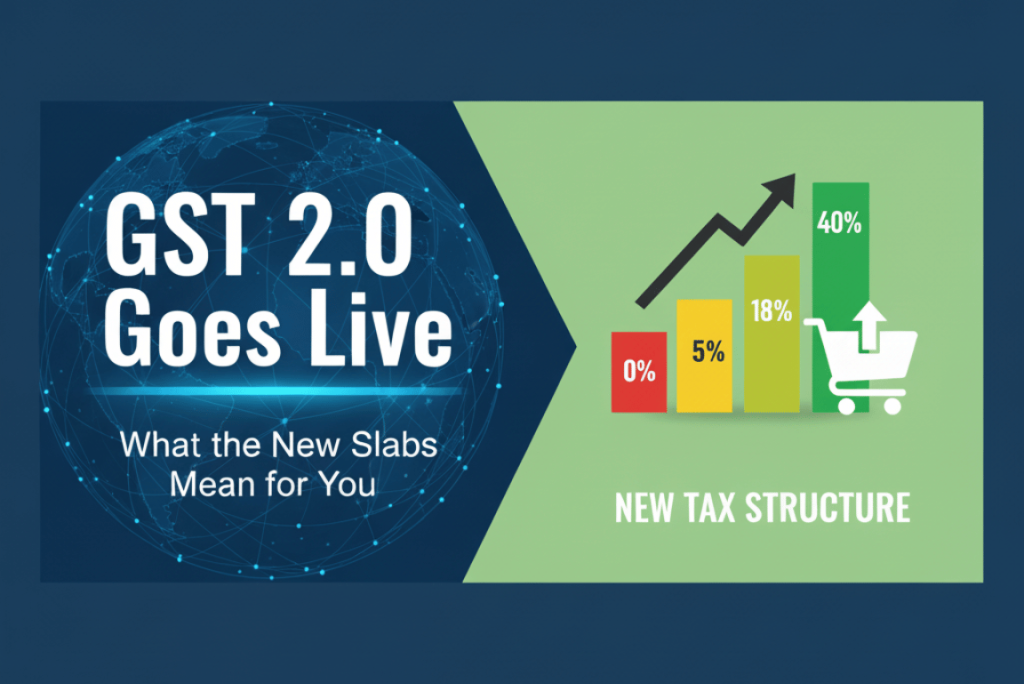
- GST 2.0 Goes Live: What the New Slabs Mean for You
GST Beyond Prices — supply chain & aftersales effects
Lower taxes on mass models often bring higher volumes — which fuels demand for installation, extended warranties, service plans and spare parts. That’s where many dealers find better margins over time. Conversely, premium brands may push customers toward financing offers, subscription services or bundled ownership packages to smooth the impact of higher taxation. Dealers who align inventory, service capacity and finance partnerships quickly will capture the longer-term upside.
Smart ways to scale service hubs regionally
Expanding into new districts or setting up regional service hubs is a common response to demand spikes. A virtual office provides a credible local address, phone handling and mail services without long-term rent — useful for multi-state GST registrations, faster supplier onboarding and local customer service while keeping fixed costs low. Explore Virtual Office options here.
Conclusion — read the invoice, plan the rollout
The split between an 18% slab for mass vehicles and a 40% slab for luxury models is the headline of GST 2.0 for autos. Buyers benefit most at the lower end; luxury buyers face higher tax bills unless dealers absorb costs. For dealers and OEMs, the playbook is clear: update systems, document MRP changes, coordinate with financiers, and pilot pricing strategies. Acting fast and transparently will turn a tax reset into market opportunity.
References
- GST 2.0 full auto list & slab changes — Economic Times
- Govt allows MRP revision on unsold stock (implementation guidance) – Economic Times
- Small cars expected under ₹4 lakh; market reaction — Economic Times
- Automakers’ price cuts & model-level pass-through (Honda, Tata, others) – Economic Times
- Day-one demand surge & dealer queues after GST 2.0 launch — Economic Times
- Other References – mint, taxtmi