Introduction — Faster onboarding for new businesses
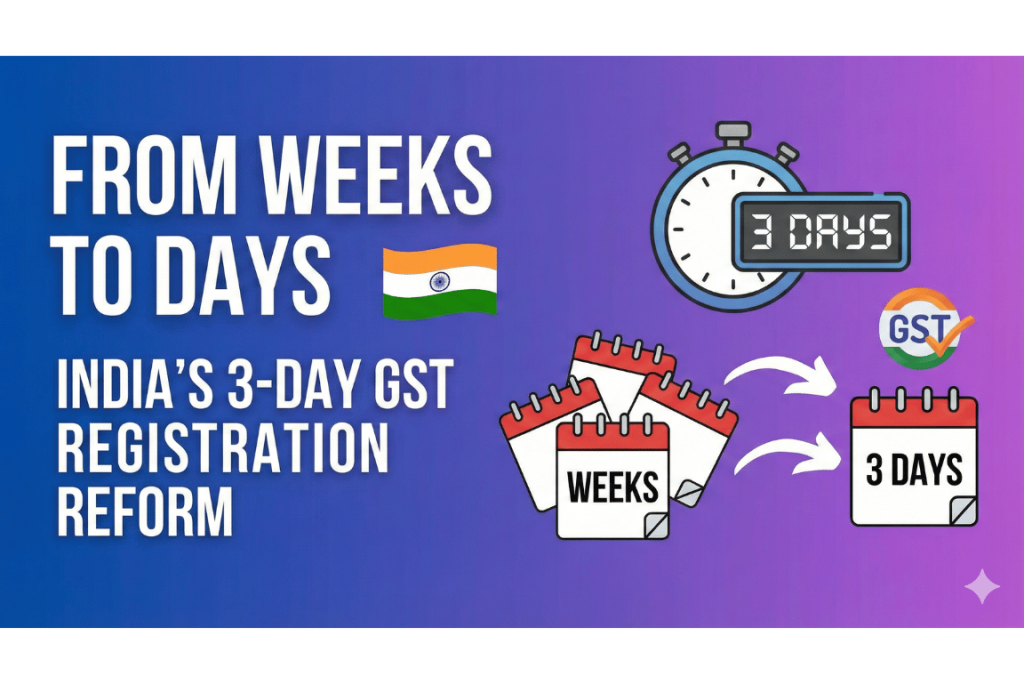
Introduction — Getting registered shouldn’t take forever. The new 3-day GST registration reform turns a previously slow, manual process into an automated, data-driven workflow for most low-risk applicants. That means entrepreneurs, small retailers and many MSMEs can move from idea to compliance in days — not weeks — if they meet the eligibility checks.
What changed — the reform in plain language
From 1 November 2025 (implementation dates stagger by notification), the Central Board of Indirect Taxes & Customs introduced rule changes that enable electronic, risk-based auto-approval of GST registrations for low-risk applicants. The system relies on PAN/Aadhaar verification, bank-data checks and automated risk filters to approve a registration within three working days. Higher-risk or incomplete applications will continue to attract manual scrutiny, but the default path for compliant applicants is now much faster.
Who benefits — the typical winners on day one
The biggest beneficiaries are small businesses that are low-risk by nature — sole proprietors, small traders, many MSMEs and digital sellers who can validate identity & bank details online. Startups that need GST for vendor onboarding, online sellers registering for marketplaces, and firms that faced long waits for paperwork will see the most immediate upside: quicker invoicing, earlier ability to claim input tax credits and faster launch timelines.
Why it matters — practical effects for cash flow and compliance
Faster registration reduces the “onboarding drag” that delayed sales, supplier contracts and formal invoicing. For a new seller, moving from zero to a valid GSTIN in three days means you can raise compliant invoices sooner and claim ITC where applicable — a direct improvement to working-capital and credibility with buyers. The automated checks also reduce human touchpoints, which lowers arbitrary delays and increases predictability for entrepreneurs.
Fast start checklist — what to prepare before applying
- PAN & Aadhaar ready: Ensure both are active and name details match exactly.
- Bank account in the business name: Have scanned cancelled cheque or bank statement ready for upload.
- Digital contact points: A working mobile number and email (for OTPs) tied to PAN/Aadhaar.
- Business proof: Recent utility bill or rent agreement and a simple photograph of the premises (if required).
- Basic documents for proprietors: ID, address, and the nature of business (SAC/HSN will be asked). Prepare these and you’ll glide through the automated checks — speeding approval to the three-day window.
Common pitfalls — why some applications still get delayed
Auto-approval depends on clean data. Mismatched names, old PAN details, bank accounts not in the declared name, or complex business structures will trigger manual review and push your timeline back. Also, applicants with prior compliance flags (suspicious ITC claims, previous cancellations) remain outside the low-risk bucket and should expect normal verification. Double-check documents before you hit submit.
FAQs — quick answers for entrepreneurs
Q1: When does the 3-day rule apply?
A1: The simplified, automated approval route is effective from the notified date (rules published late Oct 2025) and applies to low-risk applicants meeting data checks. Always check the CBIC/CBIC portal notice for exact start dates.
Q2: If my application is rejected, what next?
A2: Rejections are routed for manual review. You’ll get reasons and can rectify documents or respond through the portal — keep copies of all uploads and communications.
Q3: Will faster registration mean easier cancellations later?
A3: No — cancellations still follow procedural safeguards. Faster registration speeds onboarding but doesn’t change audit/cancellation norms; maintain clean books.
Further reading — act on the 22 Sep 2025 GST changes
- GST 2.0 Goes Live: What the New Slabs Mean for You
- Automobile GST 2025 Update: Small Cars vs Luxury Mode
- GST 2.0 Launch: Business Guide to Pricing & Compliance
Virtual Offices: Fast, Compliant Local Presence for New Businesses
If you’re starting up in a new city or want a credible business address for vendor onboarding and GST communications, a virtual office gives you a professional local address, phone handling and mail management without leasing costs. That local footprint can speed supplier onboarding and make the registration/verification process smoother — especially when bank or address proofs are required for GST applications. Explore Virtual Office options here
Conclusion — register fast, but verify faster
The 3-Day GST Registration Reform is a practical leap forward: faster approvals, less red tape and quicker access to compliant invoicing for low-risk applicants. But speed doesn’t replace preparation — clean PAN/Aadhaar, correct bank details and clear business proof are non-negotiable. Do the prep work, use the checklist above, and you’ll turn weeks of waiting into a three-day launch.
References (official notices & practical guides)
- Ministry of Finance / CBIC — Central Tax (Fourth Amendment) Rules, 2025 (notification & summary). TaxGuru
- GST Council — Recommendations of the 56th Meeting (factsheet & reforms). Goods and Services Tax Council
- Press Information Bureau — GST reform FAQs & implementation notes. pib.gov.in
- ClearTax guide — “GST Registration in 3 Days: Step-by-Step Process.” cleartax