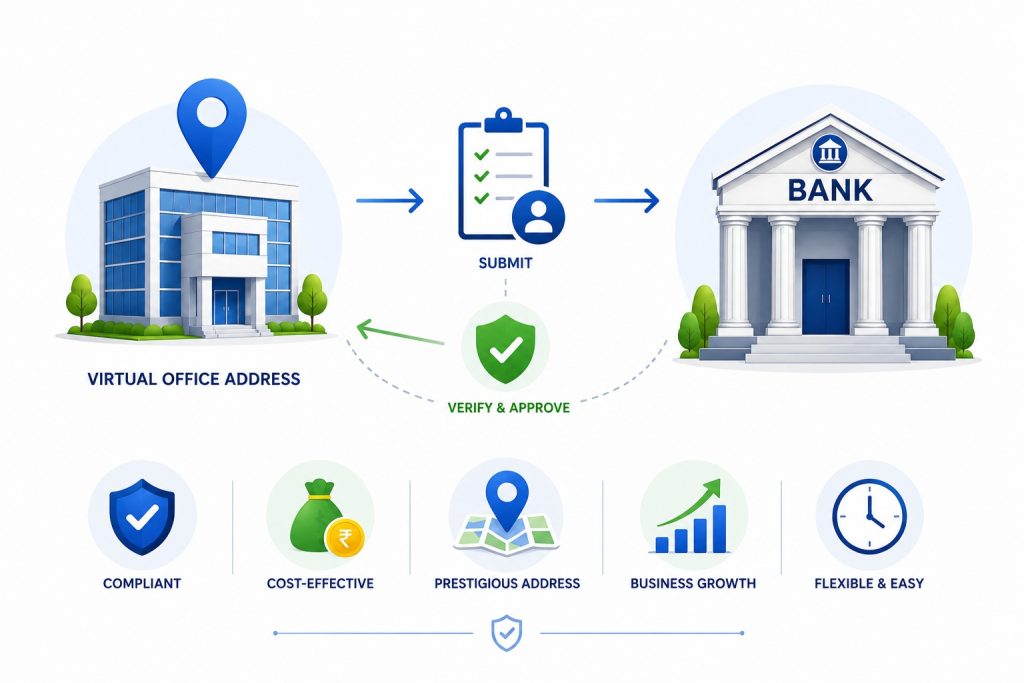
Starting a business today doesn’t necessarily mean renting a huge office, buying furniture and signing a long-term lease. As remote and hybrid work become more common, many startups are looking for flexible, affordable ways to establish a professional business presence. That’s why startups are switching to virtual offices.
But why are startups making this shift? The answer comes down to lower costs, flexibility, professional presence, and easier growth.

What Is a Virtual Office?
A virtual office enables a firm to enjoy office services without having to be present in the office. Some of the office services offered by virtual offices are a professional business address, mailbox, and conference rooms.
This offers the benefits of an office without the cost.
Why Are Startups Switching to Virtual Offices?
1. Lower Office Costs
Office rent can be a huge cost for a new business. Startups also have to take into account electricity, maintenance, furniture, internet, security and other operating costs.
A virtual office for startups can save on a lot of these expenses. Startups would have more budget to invest in product development, marketing, technology and staffing rather than investing in office spaces that may be underutilized.
2. Increased Flexibility for Remote Teams
Many startups today have employees spread across cities, and even parts of the country. Most work can be done online so a traditional office may not be necessary.
A virtual office enables a company to have a professional presence, while still giving employees the flexibility to work remotely. Thus, it is great for remote-first & hybrid startups.
3. A business address that is professional
Credibility is important for any new business. For startups, using a professional business address can help you create a more established business image than using a residential address.
A professional address can come in handy for business correspondence, marketing materials and client communication depending on the services included in the virtual office package.
4. Promoting Business Growth
Startups often want to test new markets before committing major investments. It can be expensive and risky to rent a full-time office in every new city.
A virtual office can give a local business presence without a permanent place to work. This gives startups more room to move when breaking into new markets or scaling their businesses.
5. More Focus on Business Growth
For startups, all expenses must contribute towards growth. Heavy expenditure in setting up office infrastructure may not always be a priority.
Flexible working space allows the founders to focus on getting clients, developing the products, assembling a team and formulating strategies in addition to having a professional workspace.
Who Can Benefit From a Virtual Office?
A virtual office can be useful for:
- Early-stage startups
- Remote-first businesses
- Digital agencies
- Consultants and freelancers
- E-commerce companies
- Small businesses
- Companies expanding into new locations
Businesses such as Instaspaces also provide flexible workspace solutions that can support companies looking for professional and adaptable office options.
Virtual Office vs. Traditional Office
The biggest difference is flexibility. With traditional office space, companies have to commit to physical space and the associated costs. A virtual office is about the important business services and not the same level of physical infrastructure.
And that will make the virtual office ideal for startups with limited and scattered workforces. But if your business requires dedicated desks, large meeting rooms, or day-to-day physical interaction, then the physical office may still be a better choice.
Is a Virtual Office Right for Your Startup?
It can be impacted by lots of things like your kind of business, team, budget, and plans in the future. If you do work from home and you need a professional office address, then perhaps a virtual office would suit you.
Being an integral part of the modern business environment, virtual offices keep on gaining popularity among start-ups due to their flexibility and cost-effectiveness.