Table of Contents
Introduction – Impact on Insurance Premium
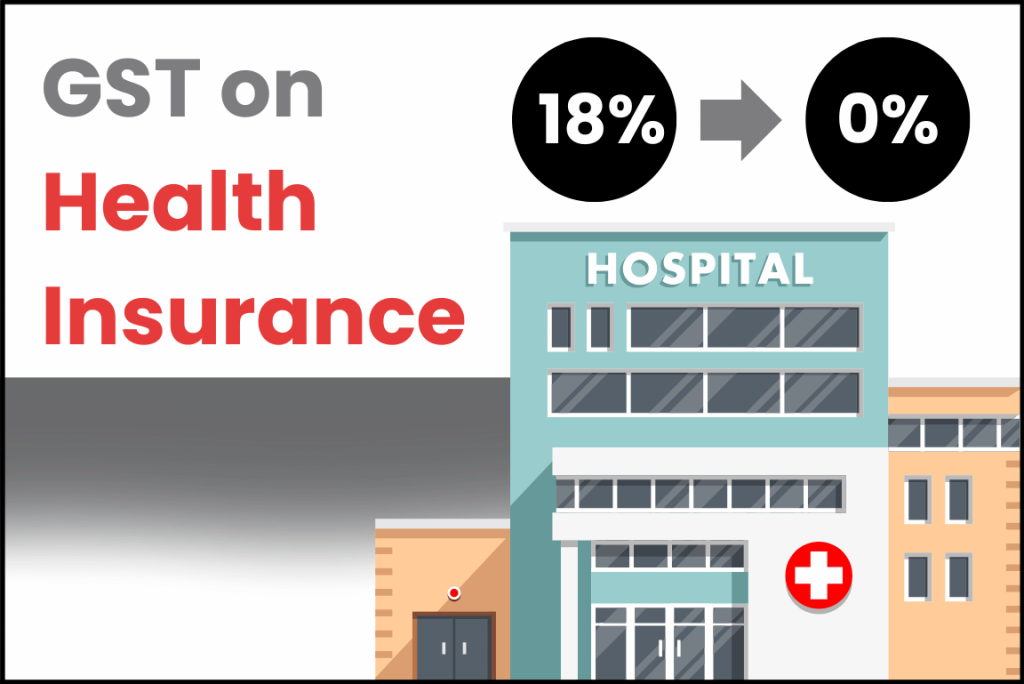
In a landmark reform, the Goods and Services Tax (GST) on individual health and life insurance premiums in India has been reduced to zero, effective September 22, 2025. (Economic Times)
Previously, policyholders paid an additional 18% GST on premiums, increasing the total cost of insurance policies. The zero-GST move is expected to make health and life insurance more accessible and affordable, encouraging a wider adoption among individuals and families across the country.
How GST Affected Premiums Before 2025
Before the GST reforms of September 22, 2025, insurance premiums were subject to an 18% GST rate, which significantly increased costs for policyholders. For example, a health insurance premium of ₹10,000 would rise to ₹11,800 after adding GST, placing a heavier financial burden on individuals and businesses alike. This higher tax outflow often discouraged customers from opting for comprehensive coverage and made corporate employee benefit packages more expensive. As a result, both individuals and organizations faced challenges in balancing affordability with adequate insurance protection under the old GST structure. (Business Standard)
GST Exemption on Health and Life Insurance Premiums
Effective September 22, 2025, the government has granted a full GST exemption on individual health and life insurance premiums, reducing the GST rate from 18% to 0%. This change delivers immediate cost savings for policyholders—for instance, a ₹10,000 health insurance premium now remains ₹10,000, compared to ₹11,800 earlier, offering a direct annual saving of ₹1,800. The exemption primarily benefits individual policyholders, making insurance more affordable and encouraging wider adoption of coverage. However, it is important to note that group health insurance policies for corporates and organizations continue to attract GST, keeping the compliance and cost structure unchanged in that segment.
Types of Policies Affected
The GST exemption on insurance premiums announced in September 2025 applies to a broad range of individual health and life insurance policies. On the health side, the relief covers family floater plans, senior citizen policies, and critical illness coverage, all of which now carry zero GST, reducing overall policy costs. Similarly, in the life insurance segment, popular products such as term insurance, Unit Linked Insurance Plans (ULIPs), and traditional endowment or money-back policies are also exempt, making them more affordable for individual buyers. However, it is important to note that the exemption does not extend to group health insurance or corporate insurance policies, which continue to attract GST as per the revised framework. (Economic Times)
Implications for Policyholders
The GST exemption on health and life insurance premiums offers tangible benefits to individual policyholders. The most immediate advantage is premium savings, with an estimated benefit of ₹2,000 to ₹2,700 per year depending on the policy size. These savings can be reinvested into higher coverage or additional insurance plans, allowing individuals to strengthen their financial protection without increasing costs. Importantly, the GST exemption applies only to premiums—claim procedures and payouts remain unchanged, ensuring that the customer experience is not disrupted. Another key implication lies in renewals: premiums for renewals on or after September 22, 2025, are GST-free, while those processed earlier will still attract the earlier 18% GST rate. Policyholders may therefore benefit by strategically timing their renewals to maximize savings. (m.economictimes.com)
Considerations for Insurers
The GST exemption on health and life insurance premiums also carries important implications for insurers. With premiums now enjoying a zero-GST status, insurers will no longer be able to claim Input Tax Credit (ITC) on these transactions. While this may lead to a slight increase in operational costs, the impact is expected to be minimal for larger insurance companies with diversified revenue streams. To manage this shift, some insurers may explore pricing adjustments to balance the loss of ITC. However, the anticipated increase in adoption of individual policies—driven by lower premium costs—is likely to offset potential revenue pressures, creating opportunities for insurers to expand their customer base in the long term. (Moneycontrol)
FAQs
Q1. Will my premium decrease immediately?
Ans. Yes, premiums paid on or after September 22, 2025, will be GST-free.
Q2. Are group health insurance policies affected?
Ans. No, only individual policies are exempt from GST.
Q3. How does this change impact claims?
Ans. Claims remain unaffected; only the premiums benefit from GST exemption. (Economic Times)
Looking at the Bigger Picture of GST in Finance
Health insurance is only one part of the larger financial ecosystem impacted by GST reforms. The way rates shift across industries tells us how businesses must rethink their service models and customer communication.
If you want to see how these changes connect across sectors, you might also find these resources helpful:
- Top GST Rate Changes That Businesses Must Watch in 2025 – a strategic lens for business leaders.
- How GST Reforms Will Impact Car Buyers in India – showing the effect on consumer-oriented industries.
- GST 2.0 Overview – for a complete picture of what’s new in the tax landscape.
This cross-sector perspective will help you anticipate trends rather than react to them.
Conclusion
The 2025 GST reform on individual health and life insurance premiums is a significant step towards making insurance more affordable and accessible. Policyholders should review their premiums, plan renewals strategically, and leverage savings to increase coverage or invest in additional protection.
This reform also encourages wider insurance adoption in India, ensuring more citizens have financial security without the burden of additional taxation. (Moneycontrol)
0 109
Leave a Reply