Table of Contents
Introduction – Why SME compliance just got easier
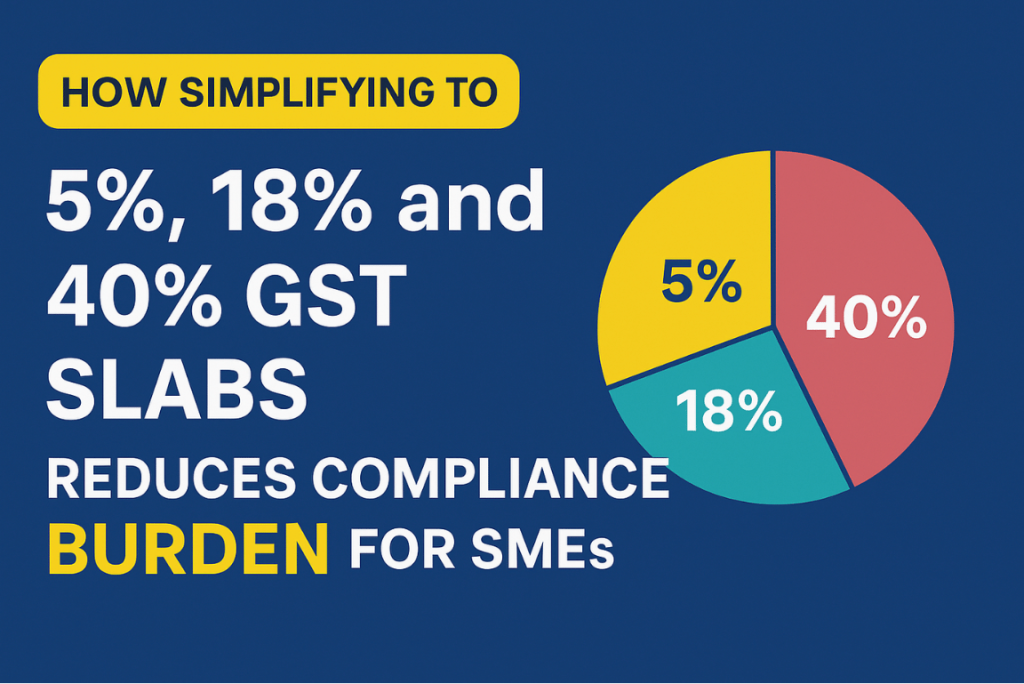
Small and medium enterprises (SMEs) live and die by operational simplicity. The recent GST revamp — consolidating multiple intermediate rates into broadly 5% and 18%, and a higher 40% band for luxury/demerit goods — is more than a consumer story: it’s a practical change that can materially reduce compliance headaches for micro and small firms. The revised rates take effect from 22 September 2025, and this article explains how that simplification translates into lower costs, fewer disputes and faster processes for SMEs.
Fewer rate choices = fewer classification problems
One of the biggest sources of billing errors and litigation for SMEs has been product classification. When similar items sit across several slabs, finance teams spend disproportionate time deciding whether a product’s correct rate is 12%, 18% or 28%. By consolidating most goods into two practical slabs (5% and 18%) and isolating a 40% demerit bracket, the government reduces ambiguous cases that trigger audits, show-cause notices and legal appeals — saving SMEs time and legal expenses. This structural simplification also reduces the need for expensive external tax advice on routine SKU-level classification.
Simpler invoicing and fewer software headaches
ERP, billing and POS systems are simpler to configure when there are fewer tax rates to maintain. SMEs that use off-the-shelf accounting packages or basic invoicing tools will find updates quicker, testing burdens lighter and reconciliation runs shorter. Less time spent on tax configuration means finance teams can focus on collections and cash flow — a practical, day-to-day win. Government moves to simplify registration and filing workflows also complement this by reducing process friction for low-risk taxpayers.
Lower frequency of disputes and audits
With clear slabs and fewer borderline classifications, frontline tax auditors see fewer questionable cases to probe. That translates into a lower probability of disruptive audits for SMEs, which often lack the bandwidth to manage protracted assessments. Predictability in taxation reduces unexpected liabilities and helps businesses plan liquidity and working capital more confidently. Independent analysis of the reform highlights litigation reduction and smoother compliance as key expected benefits.
Practical relief on stock and pricing transitions
SMEs that hold pre-packed goods or unsold stock have operational concerns when rates change. The government has allowed revision of MRP on unsold stock (sticker/stamping) within a notified period so retailers and small manufacturers can align prices with new slabs without heavy losses. This measure prevents SMEs from being stuck with obsolete price tags and gives them a straightforward route to pass on tax changes properly to consumers. Proper documentation of these revisions will be important to avoid later queries from authorities.
What SMEs should do next (practical checklist)
SMEs can convert this policy shift into an operational advantage by taking a few pragmatic steps now. First, review product-to-slab mapping at SKU level and lock classifications in your billing system. Second, test invoices and e-way/e-invoice outputs in sandbox mode to prevent surprises after 22 September. Third, document any MRP revisions and keep supplier/dealer communications on file. Finally, consider moving low-value or administrative functions to leaner setups (see next section) so operational savings can be reinvested in growth.
FAQ — Quick answers SMEs need
Q1. When do the simplified slabs start?
Ans. The revised slabs are effective 22 September 2025 unless otherwise notified.
Q1. Will I still need tax experts?
Ans. Yes — complex product lines or cross-border transactions still need specialist advice, but routine SKU classification burdens will fall.
Q3. How long can I revise MRP on unsold stock?
Ans. Authorities have allowed revised MRPs on pre-packaged unsold stock within the notified window; follow the exact Legal Metrology/CBIC guidance.
Further reading — act on the 22 Sep 2025 GST changes
- GST and Health Insurance: What You Need to Know
- Top GST Rate Changes That Businesses Must Watch in 2025
- GST Overhaul 2025: Key Announcements by Nirmala Sitharaman
Smarter operating choices for SMEs
As SMEs streamline tax and pricing operations, many also re-evaluate overheads and business presence. Virtual offices let small firms maintain professional business addresses, local phone support and compliance-friendly footprints across cities without fixed real-estate costs. For SMEs rethinking costs after GST 2.0, a virtual office can be a practical way to stay lean, maintain credibility with customers and regulators, and redeploy savings into core business activities. Explore our virtual office solutions here to see how a low-overhead setup complements your GST readiness.
Conclusion
The shift to 5%, 18% and 40% GST slabs is more than a rate tweak — it reduces ambiguity, cuts classification disputes and shortens compliance cycles that often strain SMEs. By updating systems, documenting stock changes and taking advantage of simplified filing rules, small businesses can convert the reform into operational relief and competitive advantage. The effective date is 22 September 2025 — use the weeks ahead to review SKUs, test systems and lock in the efficiencies this change promises.
References
- Recommendations of the 56th Meeting of the GST Council — Press Information Bureau (PIB).
- GST rate changes list and sectoral impact (Economic Times).
- Govt allows manufacturers to revise MRP on unsold stock (Economic Times).
- Simplifying registration & filing to ease compliance (Times of India).
- Analysis — expected benefits for SMEs from slab rationalisation (Taxilla / CompaniesInn).
Leave a Reply